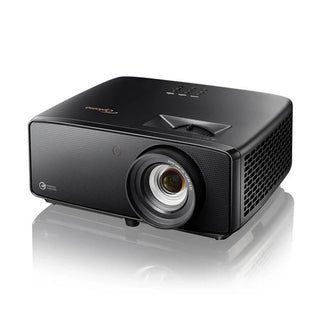
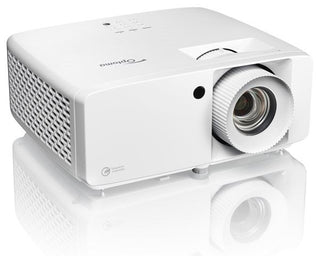
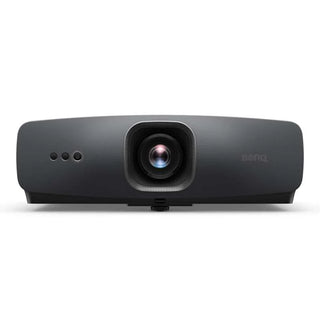
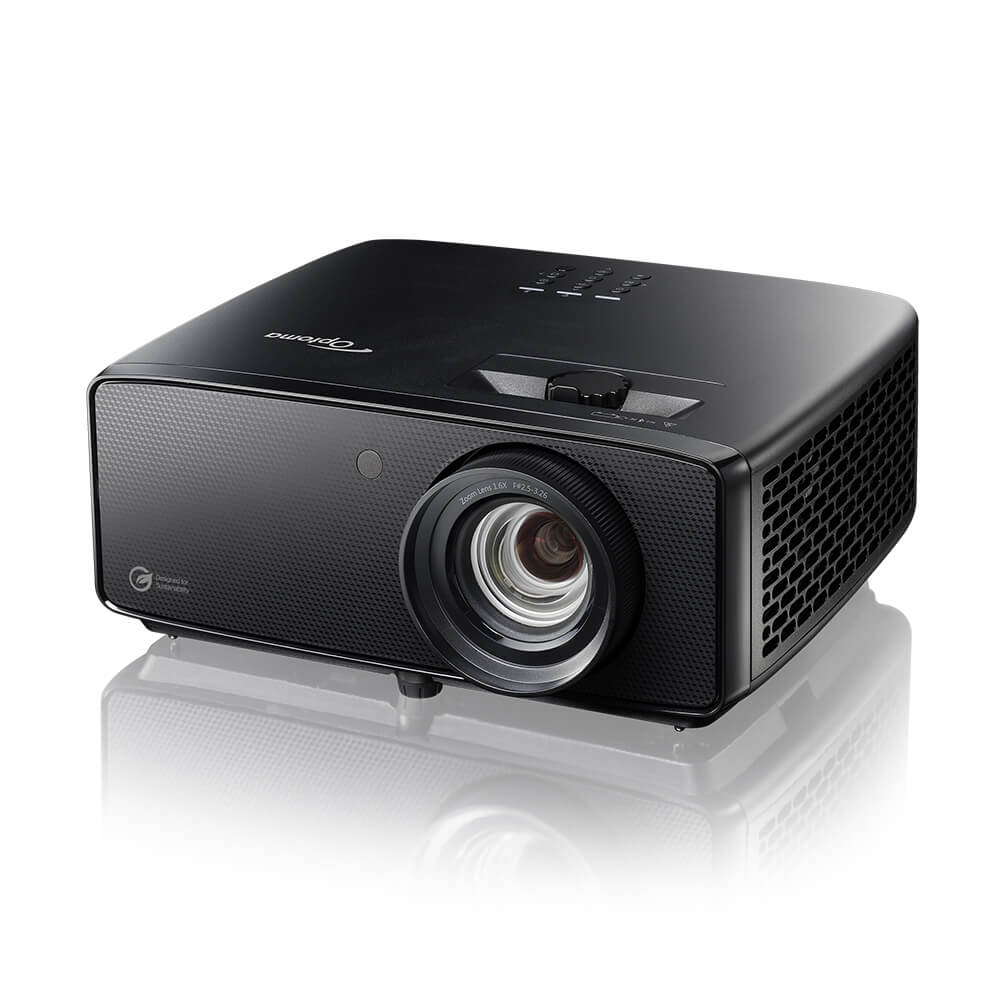
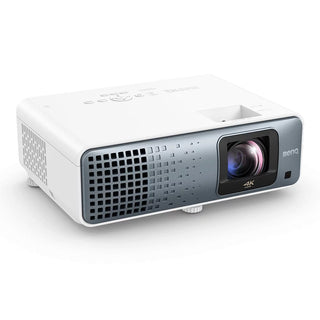
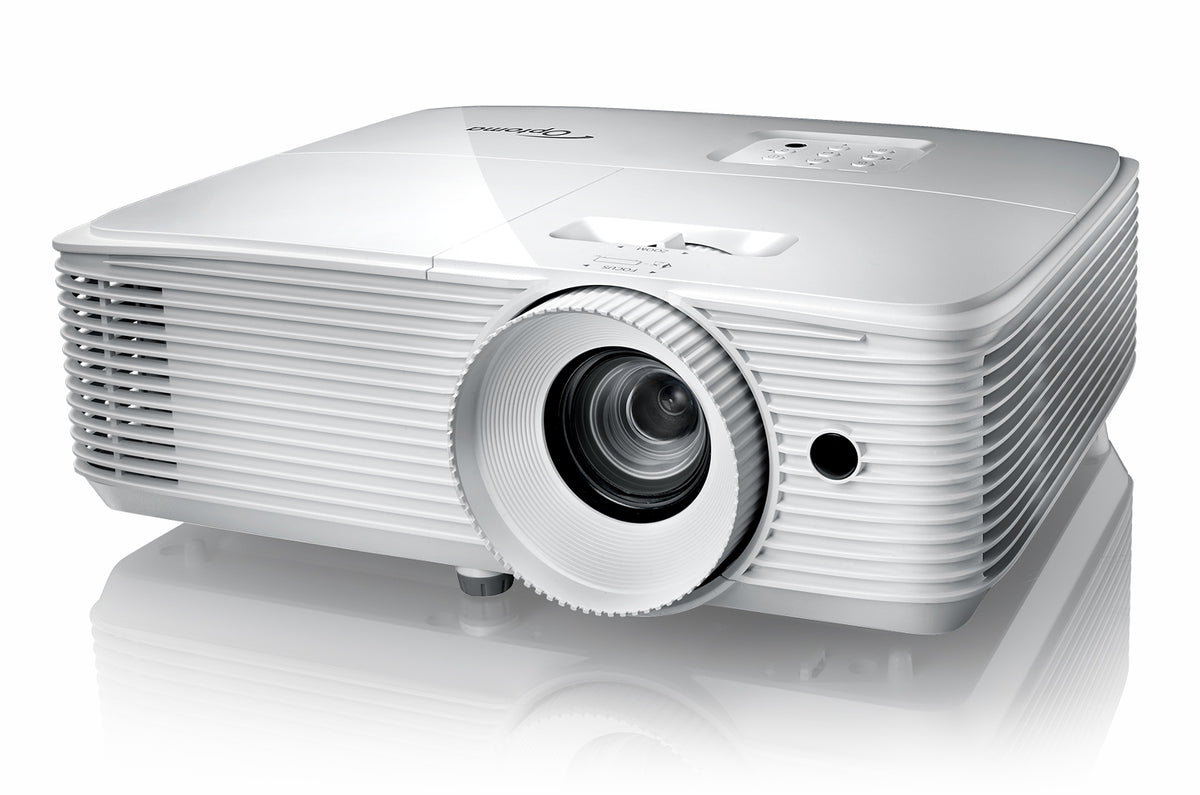
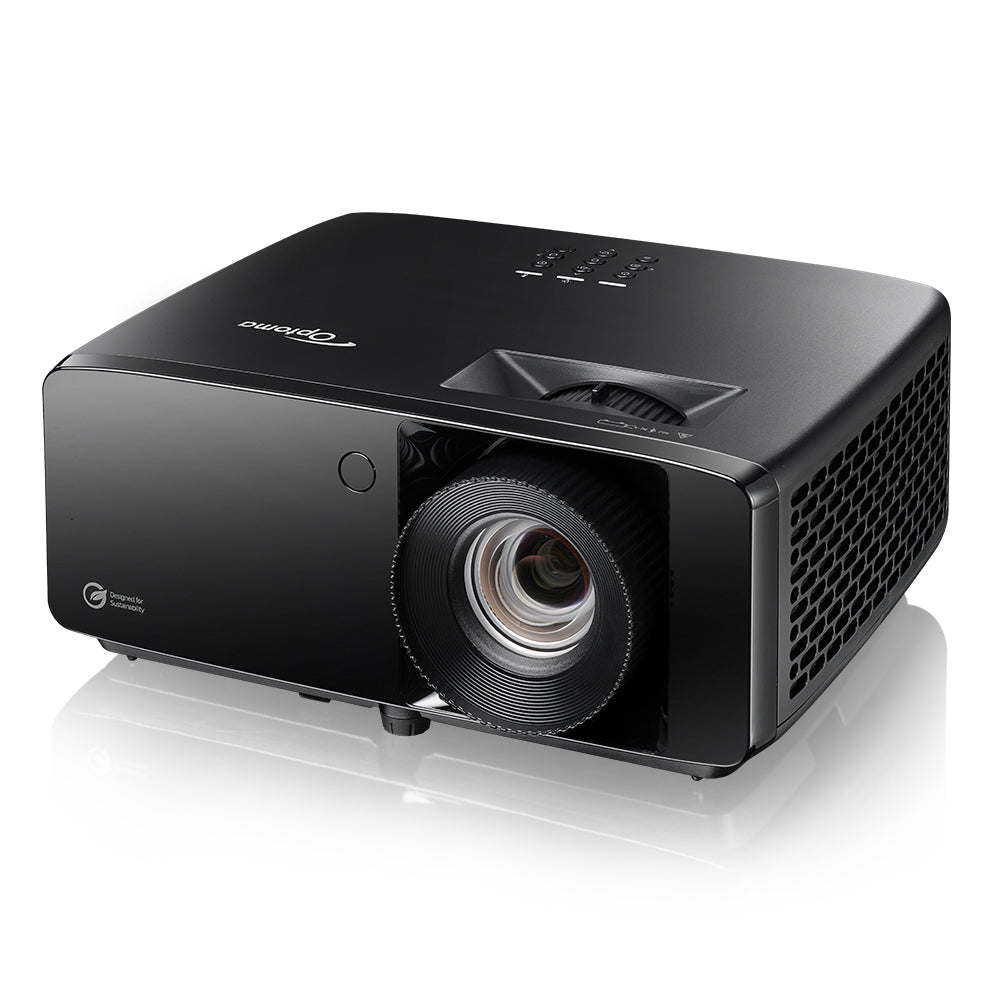
Home Projector
Home Projectors
Comparing Our Home Projector Lineup
With so many fantastic options, choosing the right home projector comes down to your room size, lighting, and viewing habits. Here is a breakdown of how our projector range compares across key categories to help you make the perfect choice.
1. Home Projector vs Home Theatre Projector
- Home Projector (Bright, versatile all-rounder): A home projector is usually brighter and more flexible, making it ideal for everyday use. It is a great all-round option for watching dramas, movies, sports, and playing games, and many people also like the flexibility of moving it between different rooms.
- Home Theatre Projector (For dedicated dark-room viewing): A home theatre projector is usually designed for a more controlled environment with little to no ambient light. These models often focus more on colour accuracy, black levels, and cinematic picture quality, making them better suited to dedicated movie rooms and viewers who want a more refined, film-like experience.
2. By Throw Distance: Where Will You Place It?
- Standard Throw (For classic theatre setups): Designed to sit on the ceiling or a shelf at the back of the room. These are ideal for dedicated media rooms and traditional home cinema layouts where you have more space between the projector and screen.
- Short Throw (For smaller rooms & gamers): Placed much closer to the screen, these help reduce shadows when someone walks past. They are a practical choice for compact rooms, gaming setups, bedrooms, and multi-purpose spaces.
- Ultra Short Throw / UST (The ultimate TV replacement): These sit on your entertainment unit just inches from the wall, projecting a massive image upward. They are perfect for customers who want a clean setup and a large-screen experience without ceiling mounting.
3. By Light Source: LED vs. Laser
- Laser Projectors (Maximum brightness & instant on/off): Best for living rooms and spaces with some ambient light, laser projectors deliver high brightness, long life, and no lamp replacement hassle. They are excellent for customers wanting strong performance and convenience.
- LED Projectors (Vibrant, cinematic colours): LED models are known for rich colour, quiet operation, and long lifespan. They are especially popular for movie nights, gaming, and users who value a more refined, cinematic image.
4. Full HD vs 4K: Do You Really Need 4K?
- Full HD is still a solid choice: If you sit further back from the screen, you are often watching the picture as a whole, so Full HD can still look very sharp and enjoyable.
- 4K is better for larger screens and closer viewing: If you sit closer or want to see more fine detail, 4K can deliver a sharper and more detailed image.
- HDR is one of the key advantages of 4K: Many 4K projectors also support HDR, which helps create stronger contrast and more visible detail in bright and dark areas of the picture, making the image look more dynamic and lifelike.
5. Spend Smart: A Great Home Theatre Is More Than Just the Projector
You do not always need to spend a huge amount on a projector alone to build an impressive home theatre. Technology continues to improve, and features that were once found only in very expensive models often become more accessible over time.
For many customers, it makes more sense to choose a well-balanced projector and allocate more of the budget towards other parts of the setup, such as a better projector screen, surround sound system, seating, lighting control, or room treatment. A great home theatre experience comes from how everything works together, not just from the projector itself.
6. The Experience Matters
Watching a movie or drama on a big screen is not only about picture quality. It is also about the experience - relaxing by yourself after a long day, enjoying a family movie night, or spending time with friends. A projector can help turn ordinary viewing into something more immersive, memorable, and enjoyable.

Featured Products
Navigating home theater projector specifications can feel like reading a foreign language, but breaking down these features reveals exactly how a projector will perform for movies and gaming.
Color Gamut Coverage
Color gamut dictates the range of colors a projector can display.
- Rec. 709: This is the standard color space for traditional high-definition (HD) TV and standard Blu-rays. It's the baseline today, but it misses out on the deepest greens and reds.
- DCI-P3: This is the commercial cinema standard. A projector covering a high percentage of DCI-P3 will display significantly richer, more vibrant, and more lifelike colors than Rec. 709, which is crucial for modern 4K HDR content.
- BT.2020 (or Rec. 2020): This is the ultimate, widest color space standard for 4K and 8K. While few consumer projectors can display 100% of BT.2020 right now, those that get close (often via laser light sources) offer the most future-proof, vivid imagery available.
HDR Format Support
High Dynamic Range (HDR) improves the contrast between the brightest whites and darkest blacks, preserving details in shadows and bright skies.
- HDR10: The baseline standard for 4K content. It uses "static metadata," meaning it sets one brightness level for the entire movie.
- HDR10+ & Dolby Vision: These are premium formats that use "dynamic metadata." They adjust brightness and contrast frame-by-frame or scene-by-scene, ensuring optimal image quality at every single moment.
- HLG (Hybrid Log-Gamma): This is specifically designed for live broadcast television (like sports) to deliver an HDR signal without using heavy metadata.
HDMI Versions
The HDMI version determines the "pipe size" for data traveling from your console or receiver to the projector.
- HDMI 2.0 & 2.0b: These support 4K resolution at 60 frames per second (fps) and basic HDR10. This is perfectly fine for standard movie watching.
- HDMI 2.1: This has a massive bandwidth upgrade, allowing for 4K at 120fps (or even 8K at 60fps). It also supports eARC (Enhanced Audio Return Channel), which lets the projector send high-resolution, uncompressed audio formats like Dolby Atmos back to your sound system.
Special Gaming Features
If you plan to connect a PS5, Xbox Series X, or PC, HDMI 2.1 enables crucial gaming features:
- VRR (Variable Refresh Rate): Syncs the projector's refresh rate with your console's output to eliminate screen tearing and stuttering during fast-paced games.
- ALLM (Auto Low Latency Mode): Automatically switches the projector into "Game Mode" to drastically reduce input lag (the delay between pressing a button and seeing the action on screen) the moment you start playing.
Home Projector Comparison Table
| Brand & Model | Color Gamut Coverage | HDR Format Support | Image Processing & Panel Tech | HDMI Version | Max Refresh Rate | Max Input Lag (Gaming) | Special Gaming Features | Built-in Audio | Fan Noise (Eco / Normal) | Smart OS / Streaming | Keystone & Setup |
|---|---|---|---|---|---|---|---|---|---|---|---|
| Standard Throw Projectors for Home | |||||||||||
| Epson EH-TW7100 | 100% Rec.709 equiv. | HDR10, HLG | 10-bit image processing / 3LCD | HDMI 2.0 | 4K @ 60Hz | ~20ms | Frame Interpolation | 2x 10W Stereo | 24 / 32 dB | None | V & H Keystone |
| Optoma Wave 130RK | 100% Rec.709 | HDR10, HLG | DuraCore Laser / Single-chip DLP | HDMI 2.0 | 1080p @ 240Hz | 4.2ms (1080p/240Hz) | 3D Support | 1x 15W Mono | 27 / 29 dB | None | 360-degree installation |
| Optoma ZK507 | 100% Rec.709 | HDR10, HLG | PureEngine / Single-chip DLP | HDMI 2.0 | 4K @ 60Hz | ~50ms+ (Not for gaming) | PureMotion for sports | 2x 5W Stereo | 30 / 32 dB | None | V & H Keystone |
| Viewsonic LX720-4K | 100% Rec.709 | HDR10, HLG | SuperColor™ / Single-chip DLP | HDMI 2.0 (eARC) | 1440p @ 120Hz, 1080p @ 240Hz | 4.2ms (1080p/240) | "Designed for Xbox" | 1x 15W Mono | 28 / 31 dB | None | V & H Keystone, 4-corner |
| BenQ GP520 | 98% Rec.709 | HDR10, HLG | HDR-PRO / Single-chip DLP | HDMI 2.1 (eARC) | 4K @ 60Hz | 17.9ms at 4K/60Hz | Auto Low Latency Mode (ALLM) | 2x 12W treVolo | 26 / 28 dB | Google TV | Auto-Focus, Auto-Keystone, Obstacle Avoid |
| BenQ TK705i | 98% Rec.709 | HDR10, HLG | Dynamic Black / Single-chip DLP | HDMI 2.0b (eARC) | 1080p @ 120Hz | 16.7ms (4K/60), 8.3ms (1080p/120) | Dedicated Game Mode | 1x 5W Mono | 28 / 31 dB | Android TV via Dongle | Auto Vertical, Manual Horizontal |
| BenQ TK710 | 95% Rec.709 | HDR10, HLG | Laser Engine / Single-chip DLP | HDMI 2.0b (eARC) | 1080p @ 240Hz | 16.7ms (4K/60), 4.2ms (1080p/240) | 3D Support, Game Modes | 1x 5W Mono | 28 / 31 dB | Android TV via Dongle | Auto Vertical, Manual Horizontal |
| BenQ W2720i | 90% DCI-P3, 100% Rec.709 | HDR10+, HDR10, HLG | CinematicColor / Single-chip DLP | HDMI 2.1 (eARC) | 1080p @ 240Hz | 17.9ms (4K/60), 6.5ms (1080p/240) | ALLM, 24p True Cinema | 2x 5W treVolo | 26 / 28 dB | Android TV via Dongle | Auto Vertical |
| BenQ W4100i | 100% DCI-P3 | HDR10+, HDR10, HLG | CinematicColor / Single-chip DLP | HDMI 2.0b (eARC) | 1080p @ 240Hz | 17.9ms (4K/60), 4.2ms (1080p/240) | 24p True Cinema | 2x 5W treVolo | 28 / 32 dB | Android TV via Dongle | 2D Keystone (V & H) |
| BenQ X3100i | 100% DCI-P3 | HDR10, HLG | CinematicColor / Single-chip DLP | HDMI 2.1 (eARC) | 1440p @ 120Hz, 1080p @ 240Hz | 16.7ms (4K/60), 8.3ms (1440p/120) | RPG/FPS/SPG Modes | 2x 5W treVolo | 28 / 32 dB | Android TV via Dongle | Auto Vertical, Manual Horizontal |
| Short Throw Projectors for Home | |||||||||||
| Optoma GT1080HDR | sRGB / Rec.709 | HDR10 (Downscaled) | Dynamic Black / Single-chip DLP | HDMI 2.0 | 1080p @ 120Hz | 8.4ms (1080p/120Hz) | Enhanced Gaming Mode | 1x 10W Mono | 26 / 28 dB | None | Vertical Keystone |
| Optoma GT2160HDR | 100% Rec.709 | HDR10, HLG | Dynamic Black / Single-chip DLP | HDMI 2.0 | 1080p @ 240Hz | 16.7ms (4K/60), 4.0ms (1080p/240) | High Frame Rate support | 1x 10W Mono | 26 / 28 dB | None | V & H Keystone |
| Viewsonic X2-4K | 125% Rec.709 | HDR10, HLG | Cinema SuperColor+ / Single-chip DLP | HDMI 2.0 (eARC) | 1440p @ 120Hz, 1080p @ 240Hz | 4.2ms (1080p/240) | "Designed for Xbox" | 2x 6W Harman Kardon | 29 / 33 dB | Custom Smart UI | V & H Keystone |
| BenQ TK705STi | 98% Rec.709 | HDR10, HLG | Dynamic Black / Single-chip DLP | HDMI 2.0b (eARC) | 1080p @ 120Hz | 16.7ms (4K/60), 8.3ms (1080p/120) | Dedicated Game Mode | 1x 5W Mono | 28 / 31 dB | Android TV via Dongle | Auto Vertical, Manual Horizontal |
| BenQ TK710STi | 95% Rec.709 | HDR10, HLG | Laser Engine / Single-chip DLP | HDMI 2.0b (eARC) | 1080p @ 240Hz | 16.7ms (4K/60), 4.2ms (1080p/240) | 3D Support, Game Modes | 1x 5W Mono | 28 / 31 dB | Android TV via Dongle | Auto Vertical, Manual Horizontal |
| BenQ X500i | 84% DCI-P3, 98% Rec.709 | HDR10, HLG | SSI Dynamic Black / Single-chip DLP | HDMI 2.1 (eARC) | 1440p @ 120Hz, 1080p @ 240Hz | 16.7ms (4K/60), 8.3ms (1440p/120) | Auto Game Mode, Crosshair | 2x 5W treVolo | 28 / 31 dB | Android TV via Dongle | Auto Vertical, Manual Horizontal |
| Ultra Short Throw Projectors for Home Theatre | |||||||||||
| Epson EH-LS650B | 100% Rec.709 equiv. | HDR10, HLG | Adaptive Gamma / 3LCD | HDMI 2.0 (ARC) | 4K @ 60Hz | Under 20ms | Low Latency Game Mode | 20W 2.1 Yamaha | 23 / 36 dB | Android TV (Built-in) | App-based point correction |
| Epson EH-LS670 | 100% Rec.709 equiv. | HDR10, HLG | AI Image Enhancement / 3LCD | HDMI 2.0 (eARC) | 4K @ 60Hz | Under 20ms | Low Latency Game Mode | 20W 2.1 Bose | 20 / 29 dB | Google TV (Built-in) | App-based point correction |
| Epson EH-LS800 | Extends beyond Rec.709 | HDR10, HLG | 10-bit color processing / 3LCD | HDMI 2.0 (ARC) | 1080p @ 120Hz | Under 20ms | Dedicated gaming HDMI | 20W 2.1 Yamaha | 19 / 32 dB | Android TV (Built-in) | App-based point correction |
| Epson EH-LS970B | Extends beyond Rec.709 | HDR10, HLG | Epson QZX Processor / 3LCD | HDMI 2.1 (eARC) | 4K @ 120Hz | <20ms (4K/120Hz) | 4K/120Hz support, ALLM | 20W 2.1 Bose | 19 / 32 dB | Google TV (Built-in) | Advanced geometric correction |